
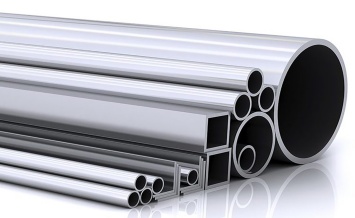
When it comes to corrosion resistance, versatility, and durability, few materials can match 304 Stainless Steel. 304 Stainless Steel’s common name of “workhorse steel” says it all; this alloy is used in construction, manufacturing, food processing, and even medical devices. However, what makes 304 Stainless Steel so trusted and one of the most popular alloys for countless applications? This article will help you understand stainless steel and why it has become an industry standard, explaining its key features, benefits, and practical uses. Contact us
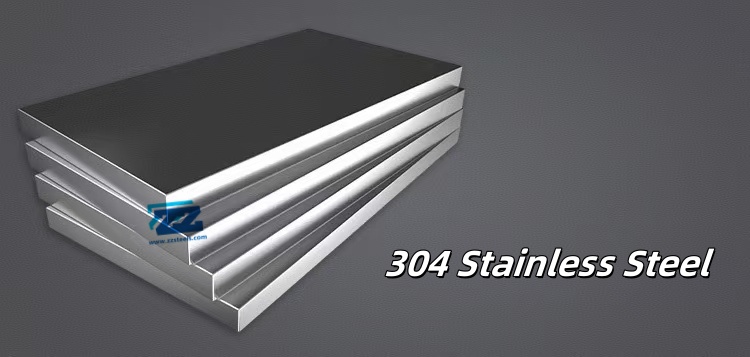
What Is 304 Stainless Steel?
304 Stainless Steel is a highly utilized alloy that is based on iron and contains significant amounts of chromium (18-20%) and nickel (8-10.5%). As part of the austenite, this type of steel offers excellent corrosion resistance, strength, and performance. This steel is completely non-magnetic after annealing, has excellent formability, and performs well over a wide temperature range. As a result, it is used in the construction, automotive, and food processing industries. Its balanced strength and corrosion resistance make it an industry standard.
Main Components of Grade 304 Stainless Steel
Chromium (Cr): 18-20%
Chromium is the core element of stainless steel “stainless”, can form a dense layer of chromium oxide (Cr₂O₃) passivation film on the surface, blocking the contact between oxygen and the internal metal, thus preventing corrosion.
Nickel (Ni): 8-10.5%
Nickel is a key element in stabilizing the austenitic organization, giving 304 stainless steel good toughness, ductility, and low-temperature properties, while enhancing corrosion resistance.
Carbon (C): ≤0.08%
Low carbon content reduces the risk of carbide formation (leading to intergranular corrosion) when carbon combines with chromium during welding.
Other Elements:
Manganese (Mn ≤ 2.0%), Silicon (Si ≤ 1.0%), Phosphorus (P ≤ 0.045%), and Sulfur (S ≤ 0.03%) are used primarily to optimize smelting and processing properties.
Chemical Composition
| CHEMICAL | Carbon | Silicon | Manganese | Phosphorus | Sulphur | Nickel | Chromium | Nitrogen | |
| 304 | Specification (max) | 0.08 | 0.75 | 2 | 0.045 | 0.03 | 8.00 – 10.50 | 18.00 – 20.00 | 0.1 |
| (typical) | 0.045 | 0.49 | 1.22 | 0.028 | 0.005 | 8.3 | 18.2 | 0.045 | |
| 304L | Specification (max) | 0.03 | 0.75 | 2 | 0.045 | 0.03 | 8.00 – 12.00 | 18.00 – 20.00 | 0.1 |
| (typical) | 0.02 | 0.42 | 1.46 | 0.028 | 0.005 | 9.1 | 18.3 | 0.048 | |
| 304H | Specification (max) | 0.04 – 0.10 | 0.75 | 2 | 0.045 | 0.03 | 8.00 – 10.50 | 18.00 – 20.00 | – |
| (typical) | 0.049 | 0.49 | 1.25 | 0.028 | 0.005 | 8.3 | 18.3 | 0.043 | |
Mechanical Properties
| Mechanical | Thickness | 0.2% Proof Stress MPa | Tensile Strength MPa | Elongation % | Hardness HB (max) | |
| 304 | Specification (min) | 205 | 520 | 40 | 202 | |
| typical values | 0.3 – 3.5mm | 260 | 660 | 55 | 160 | |
| 3.6 – 6mm | 250 | 600 | 55 | 160 | ||
| > 6mm | 240 | 580 | 55 | 155 | ||
| 304L | Specification (min) | 170 | 485 | 40 | 183 | |
| 304H | Specification (min) | 205 | 520 | 40 | 202 | |
Typical Application Areas
Due to its superior comprehensive performance and relatively moderate cost, 304 stainless steel is widely used in:
Kitchen utensils and food processing equipment: sinks, tableware, pots, kitchen countertops, food storage containers, dairy and beer brewing equipment, etc.
Architecture and decoration: building exterior decoration, interior decoration, railings, elevators, door and window frames, etc.
Chemical and petrochemical industries: various containers, pipes, heat exchangers, etc., for handling chemicals that are not highly corrosive.
Medical equipment: surgical instruments, medical equipment components, etc., because they are easy to clean and hygienic.
Automotive industry: exhaust system components, automotive decorative parts, etc.
Daily necessities: bolts, nuts, springs, washing machine inner drums, etc.
Water treatment: water pipes, water tanks, etc.
Machinability
Compared to carbon and non-carbon steel similar stainless steel material s, 304 stainless steel has good machinability but does not compare as well to the easy-to-machine stainless steel grades. This grade of stainless steel is relatively tough, but becomes harder during machining. To minimize tool depreciation and increase efficiency, sharper, faster cutting tools made from carbide or brittle steels should be used. After machining, finishing is important because it improves the appearance and use of the material. Some techniques include grinding, polishing, and deburring, which provide a smooth and corrosion-free surface for highly sensitive or extreme environmental applications. With adequate machining and superior processing techniques, manufacturers can fully utilize 304 stainless steel in even the most complex designs.
Corrosion Resistance
This is the most outstanding feature of 304 stainless steel. Due to the presence of chromium, its surface will form a thin and dense passivation film (chromium oxide), which can effectively prevent the diffusion of oxygen into the steel interior, thus protecting the substrate from corrosion. It exhibits good corrosion resistance in most atmospheric environments, fresh water, and a wide range of chemical media (e.g. dilute acids and alkalis).
Resistance to atmospheric corrosion: virtually rust-free in dry or humid atmospheric environments, suitable for outdoor architectural decoration.
Resistant to water and weak corrosive media: good corrosion resistance to fresh water, steam, neutral solutions, commonly used in sinks, pipelines and so on.
Heat Resistance
Heat resistance refers to the ability of a stainless steel to maintain its excellent physical and mechanical properties at high temperatures.
Carbon in austenitic stainless steel is a strong formation and stabilization of austenite and expand the austenite zone elements. The ability of carbon to form austenite is about 30 times that of nickel, carbon is an interstitial element, through solid solution strengthening can significantly improve the strength of austenitic stainless steel. Carbon can also improve the austenitic stainless steel in highly concentrated chlorides (such as 42% MgCl2 boiling solution) in the stress corrosion resistance.
Cold Fabrication
As 304 stainless steel is cold worked, its plastic deformation at room temperature is significantly enhanced. This increases its strength and hardness without the need for excessive heat treatment, resulting in improved performance and efficiency in a variety of applications. During cold working, it undergoes strain hardening, a proliferation of dislocations within the crystalline framework, which increases hardness and tensile strength.
Studies have shown that after rigorous cold working, the tensile strength of Stainless Steel 304 increases dramatically, in some cases exceeding 1,000 MPa (or 145,000 psi), depending on the value of the deformation. The yield strength of the material also increases, albeit at the expense of some ductility.
Weldability
304 stainless steel is highly regarded for its excellent weldability, which makes it easy to work with. Because 304 stainless steel can be welded using the methods described above, techniques such as TIG (Tungsten Inert Gas), MIG (Metal Inert Gas) and even resistance welding can be used to form extremely durable joints while retaining the material’s corrosion-resistant properties. For applications involving a large number of welds, the use of a low carbon variant such as 304L is often recommended to alleviate problems such as sensitization.
High Temperatures
304 stainless steel is highly sensitive to high temperatures. Prolonged exposure to temperatures in excess of 870 degrees Celsius (1600 degrees Fahrenheit) can lead to a loss of strength due to microstructural changes such as carbide precipitation. This can damage the metal and reduce its resistance to corrosion, especially intergranular corrosion. To mitigate these effects, 304L grades and heat-resistant alloys are often used.
Comparison with 316 Stainless Steel
Many people will compare 304 stainless steel with 316 stainless steel. The main difference between the two is that 316 stainless steel has about 2-3% molybdenum (Molybdenum) added. The addition of molybdenum significantly enhances the resistance of 316 stainless steel to pitting and crevice corrosion in chloride environments (e.g., seawater, brine, some acidic solutions), so 316 stainless steel is often referred to as “marine-grade stainless steel,” and its cost is also higher than 304.
Advantages of 304 stainless steel
Excellent corrosion resistance
Good formability and weldability
High strength and durability
Hygienic and easy to clean
Cost effective
Disadvantages of 304 stainless steel
Susceptible to chloride corrosion: susceptible to pitting and crevice corrosion, especially in environments with high chloride concentrations.
Lower corrosion resistance than 316 stainless steel: 304 stainless steel is less resistant to highly corrosive acids or harsh chemical environments.
Easily scratched: 304 stainless steel has a relatively soft surface that is easily scratched.
Average wear resistance: Not suitable for applications requiring high wear resistance.
Unsuitable for very high temperatures: prolonged exposure to very high temperatures can lead to sensitization and reduced corrosion resistance.
Risk of stress corrosion cracking: may be susceptible to stress corrosion cracking in certain hot chloride environments.
Conclusion
Stainless steel 304 is one of the most widely used and well-balanced stainless steel materials, particularly suitable for applications with moderate requirements for corrosion resistance and formability. Its price is moderate, abundant supply, suitable for large-scale manufacturing and engineering applications. However, in the chlorine ion or strong corrosive environment, it is recommended to use higher corrosion resistance of stainless steel grades such as 316.