
When it comes to stainless steel pipe standards, choosing between ASTM A312 and ASTM A358 is critical and can have a significant impact on the success of a project. ASTM A312 and A358 are two widely used standards in the stainless steel pipe industry that define the manufacturing, material, and performance requirements for stainless steel pipes. Although both standards cover austenitic stainless steel pipes used in high-temperature and corrosion-resistant environments, they have different applications and advantages.
ASTM A312 Standard
This specification covers seamless, straight-seam welded, and heavily cold worked welded austenitic stainless steel pipe intended for high-temperature and general corrosive service.
Grades TP304H, TP309H, TP309HCb, TP310H, TP310HCb, TP316H, TP321H, TP347H, and TP348H are modifications of Grades TP304, TP309Cb, TP309S, TP310Cb, TP310S, TP316, TP321, TP347, and TP348, and are intended for service at temperatures where creep and stress rupture properties are important.
ASTM A312 Grades
TP304 / 304L
TP304 is one of the most commonly used austenitic stainless steels, often referred to as “18/8” stainless steel due to its approximately 18% chromium (Cr) and 8% nickel (Ni) content. It offers excellent overall corrosion resistance, capable of withstanding corrosion from various weak acids and alkalis, making it widely used in various industrial and civilian applications.
TP316 / 316L
TP316 is an upgraded version of TP304, with the addition of approximately 2% molybdenum (Mo), significantly enhancing its resistance to chloride pitting and crevice corrosion. It is considered an upgraded version of 304 and is commonly used in applications requiring higher corrosion resistance, such as marine equipment, coastal structures, chemical processing, pharmaceuticals, papermaking, textiles, and the nuclear industry.
TP904L is an ultra-austenitic stainless steel with corrosion resistance far exceeding that of TP316. It is specifically designed for harsh corrosion environments, maintaining stable performance in strong acids and highly corrosive media. It is commonly used in sulfuric acid production, seawater desalination equipment, high-pressure pipelines, pollution control devices, and offshore platforms operating under extreme conditions.
Chemical Composition of ASTM A312 Grades
| CHEMICAL | LIMITS | C | Mn | P | S | Si | Ni | Cr | Mo | N |
| ASTM A312 TP304 | MIN | 8.00 | 18.00 | |||||||
| MAX | 0.08 | 2.00 | 0.05 | 0.03 | 1.00 | 11.00 | 20.00 | |||
| ASTM A312 TP304L | MIN | 8.00 | 18.00 | |||||||
| MAX | 0.035 | 2.00 | 0.045 | 0.030 | 1.00 | 13.00 | 20.00 | |||
| ASTM A312 TP316 | MIN | 11.00 | 16.00 | 2.00 | ||||||
| MAX | 0.080 | 2.00 | 0.045 | 0.030 | 1.00 | 14.00 | 18.00 | 3.00 | ||
| ASTM A312 TP316L | MIN | 10.00 | 16.00 | 2.00 | ||||||
| MAX | 0.035 | 2.00 | 0.045 | 0.030 | 1.00 | 14.00 | 18.00 | 3.00 | ||
| ASTM A312 TP904L | MIN | 23.00 | 19.00 | 4.00 | ||||||
| MAX | 0.020 | 2.00 | 0.045 | 0.04 | 1.00 | 28.00 | 23.00 | 5.00 | 0.10 |
Mechanical Properties of ASTM A312 Grades
| MATERIAL | T.S (MPA) | Y.S (MPA) | EL % |
| ASTM A312 TP304 | 515min | 205 min | 35 min |
| ASTM A312 TP304L | 485 min | 170 min | 35 min |
| ASTM A312 TP316 | 515min | 205min | 35 min |
| ASTM A312 TP316L | 485 min | 170 min | 35 min |
| ASTM A312 TP904L | 490min | 215min | 35min |
ASTM A358 Standard
This specification covers electric-fusion-welded austenitic chromium-nickel stainless steel pipe suitable for corrosive or high-temperature service, or both, or for general applications.
Note 1: The dimensionless designator NPS (nominal pipe size) has been substituted in this standard for such traditional terms as “nominal diameter,” “size,” and “nominal size.”
ASTM A358 Classes
Class 1—Pipe shall be double welded by processes employing filler metal in all passes and shall be completely radio-graphed.
Class 2—Pipe shall be double welded by processes employing filler metal in all passes. No radiography is required.
Class 3—Pipe shall be single welded by processes employing filler metal in all passes and shall be completely radio-graphed.
Class 4—Same as Class 3 except that the weld pass exposed to the inside pipe surface may be made without the addition of filler metal (see 6.2.2.1 and 6.2.2.2).
Class 5—Pipe shall be double welded by processes employing filler metal in all passes and shall be spot radio- graphed.
Differences Between ASTM A312 and ASTM A358
Manufacturing Process:
ASTM A312:
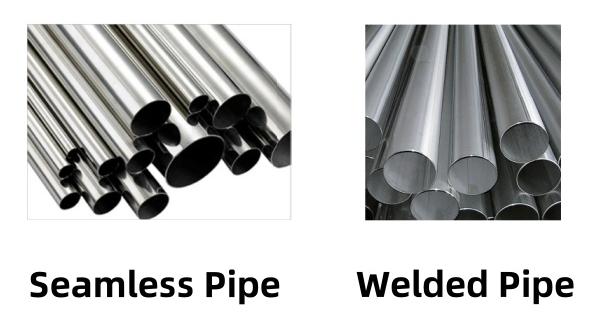
Welded tubes conforming to ASTM A312 are manufactured using an automatic welding process without the addition of filler metal during welding. Deep cold-drawn tubes are manufactured from welded tubes that have passed 100% RT (radiographic testing), undergo cold drawing to reduce wall thickness and weld thickness by ≥35%, and are finally subjected to annealing heat treatment. The ASTM A312 standard permits the use of both seamless and welded processes.
– Seamless tubes: Manufactured by piercing and drawing solid steel billets, with no weld seams.
– Welded tubes: Manufactured by rolling stainless steel sheets or strips into tubes and then welding them.
ASTM A358:
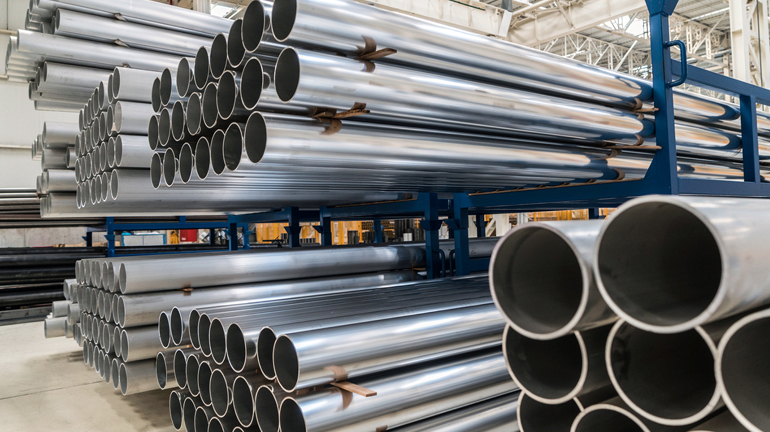
ASTM A358 stainless steel pipes are manufactured using the electric fusion welding process, which has very strict requirements for the welding process. The standard classifies pipes into different grades, with detailed specifications for weld requirements and inspections for each grade. For example, the highest grade, Class 1, requires all welds to be double-sided welded using filler metal and must undergo comprehensive radiographic testing.
Testing Requirements:
ASTM A312:
ASTM A312 requires that all welds undergo testing, inspection, and heat treatment. Nominal pipes must be free of scale and contaminated iron filings and should be supplied in a heat-treated condition.
ASTM A358:
ASTM A358 specifies that Class 1, 3, and 4 welded pipes must undergo 100% RT testing on all welded joints; Class 5 welded pipes require partial RT testing of welded joints, with the radiographic testing length for each 50-foot (15-meter) weld not less than 12 inches (300 millimeters). Additionally, various optional requirements such as product analysis, tensile testing, and bending testing are available.
Size Range
ASTM A312:
Standard sizes are commonly used, with normal wall thickness.More focused on standard applications where extreme wall thickness is not required.
ASTM A312 nominal pipe sizes are typically smaller, with typical manufacturing sizes up to 30 inches.
ASTM A358:
Typically applies to larger diameter and heavier wall thickness pipes.Specifically designed for applications requiring robustness in higher pressures or corrosive environments.
ASTM A358 is typically used for larger pipe sizes, with typical manufacturing sizes up to 48 inches.
Application Scope
ASTM A312:
The ASTM A312 standard primarily covers austenitic stainless steel seamless pipes (Seamless), welded pipes (Welded), and heavily cold-worked welded pipes (Heavily Cold Worked Welded Pipe), suitable for fluid conveyance systems in high-temperature and general corrosive environments.
Fluid conveyance piping for chemical and petrochemical equipment
Sanitary piping in the food, beverage, and pharmaceutical industries
Heat exchangers, boilers, and condensers
Medium-pressure transportation in the oil and gas industry
Desalination equipment and ship piping
ASTM A358 :
The ASTM A358 standard applies to large-diameter austenitic stainless steel electric-fusion-welded pipes, particularly suitable for use in high-temperature, high-pressure, and highly corrosive environments.
Main transmission pipelines for petroleum refining facilities
LNG and natural gas transmission pipelines
Boilers and flue gas desulfurization systems in thermal power plants
Seawater treatment and long-distance water supply projects
Main pipelines for large-scale chemical plants
ASTM A312 & A358 & ASME B36.19M & B36.10M
| Nominal | Outside | Nominal Wall Thickness(mm) | ||||||||
| Diameter | Diameter | ASME B36.19M | ASME B36.10M | |||||||
| NPS | (mm) | SCH5S | SCH10S | SCH40S | SCH80S | SCH5 | SCH10 | SCH20 | STD | XS |
| 1/4 | 13.72 | – | 1.65 | 2.24 | 3.02 | – | 1.65 | – | 2.24 | 3.02 |
| 3/8 | 17.15 | – | 1.65 | 2.31 | 3.2 | – | 1.65 | – | 2.31 | 3.2 |
| 1/2 | 21.34 | 1.65 | 2.11 | 2.77 | 3.73 | 1.65 | 2.11 | – | 2.77 | 3.73 |
| 3/4 | 26.67 | 1.65 | 2.11 | 2.87 | 3.91 | 1.65 | 2.11 | – | 2.87 | 3.91 |
| 1 | 33.4 | 1.65 | 2.77 | 3.38 | 4.55 | 1.65 | 2.77 | – | 3.38 | 4.55 |
| 1 1/4 | 42.16 | 1.65 | 2.77 | 3.56 | 4.85 | 1.65 | 2.77 | – | 3.56 | 4.85 |
| 1 1/2 | 48.26 | 1.65 | 2.77 | 3.68 | 5.08 | 1.65 | 2.77 | – | 3.68 | 5.08 |
| 2 | 60.33 | 1.65 | 2.77 | 3.91 | 5.54 | 1.65 | 2.77 | – | 3.91 | 5.54 |
| 2 1/2 | 73.03 | 2.11 | 3.05 | 5.16 | 7.01 | 2.11 | 3.05 | – | 5.16 | 7.01 |
| 3 | 88.9 | 2.11 | 3.05 | 5.49 | 7.62 | 2.11 | 3.05 | – | 5.49 | 7.62 |
| 3 1/2 | 101.6 | 2.11 | 3.05 | 5.74 | 8.08 | 2.11 | 3.05 | – | 5.74 | 8.08 |
| 4 | 114.3 | 2.11 | 3.05 | 6.02 | 8.56 | 2.11 | 3.05 | – | 6.02 | 8.56 |
| 5 | 141.3 | 2.77 | 3.4 | 6.55 | 9.53 | 2.77 | 3.4 | – | 6.55 | 9.53 |
| 6 | 168.28 | 2.77 | 3.4 | 7.11 | 10.97 | 2.77 | 3.4 | – | 7.11 | 10.97 |
| 8 | 219.08 | 2.77 | 3.76 | 8.18 | 12.7 | 2.77 | 3.76 | 6.35 | 8.18 | 12.7 |
| 10 | 273.05 | 3.4 | 4.19 | 9.27 | 12.7 | 3.4 | 4.19 | 6.35 | 9.27 | 12.7 |
| 12 | 323.85 | 3.96 | 4.57 | 9.53 | 12.7 | 3.96 | 4.57 | 6.35 | 9.53 | 12.7 |
| 14 | 355.6 | 3.96 | 4.78 | 9.53 | 12.7 | 3.96 | 6.35 | 7.92 | 9.53 | 12.7 |
| 16 | 406.4 | 4.19 | 4.78 | 9.53 | 12.7 | 4.19 | 6.35 | 7.92 | 9.53 | 12.7 |
| 18 | 457.2 | 4.19 | 4.78 | 9.53 | 12.7 | 4.19 | 6.35 | 7.92 | 9.53 | 12.7 |
| 20 | 508 | 4.78 | 5.54 | 9.53 | 12.7 | 4.78 | 6.35 | 9.53 | 9.53 | 12.7 |
| 22 | 558.8 | 4.78 | 5.54 | – | – | 4.78 | 6.35 | 9.53 | 9.53 | 12.7 |
| 24 | 609.6 | 5.54 | 6.35 | 9.53 | 12.7 | 5.54 | 6.35 | 9.53 | 9.53 | 12.7 |
| 26 | 660.4 | – | – | – | – | – | 7.92 | 12.7 | 9.53 | 12.7 |
| 28 | 711.2 | – | – | – | – | – | 7.92 | 12.7 | 9.53 | 12.7 |
| 30 | 762 | 6.35 | 7.92 | – | – | 6.35 | 7.92 | 12.7 | 9.53 | 12.7 |
| 32 | 812.8 | Thickness :6.35~30mm | ||||||||
| | | | | |||||||||
| 84 | 2133.6 | |||||||||
| Remark | (1)Marking:Within production capability. | |||||||||
| (2)Other nominal diameter and wall thickness subject to the approval of vendor and client. | ||||||||||
| (3)Calculating formula for the value of mass (kg/m):304/L[W=0.02491t(D-t)], 316/L[W=0.02507t(D-t)] | ||||||||||
Conclusion
In summary, ASTM A312 and ASTM A358 are important standards that define the quality of stainless steel tubes and their suitability for various applications. ASTM A312 has a wide range of applications, covering both seamless and welded tubes, and is suitable for use across various industries. ASTM A358, on the other hand, focuses on electrofusion welded tubes, primarily used in high-temperature and corrosive environments, offering different grades to meet specific application requirements. Understanding these differences is crucial for selecting the appropriate stainless steel tube to meet the unique needs of a project.