
NPT Threaded Fittings are a type of pipe fitting widely used in industrial piping systems. They are designed and manufactured in accordance with the American National Pipe Thread Standard (National Pipe Taper, NPT) to ensure secure pipe connections and reliable sealing. Whether for water, gas, oil, or chemical media piping, NPT threaded fittings provide efficient and durable connection solutions.
What are NPT Threaded Fittings?
NPT Threaded Fittings are pipe fittings manufactured in accordance with the NPT tapered pipe thread standard established by the American National Standards Institute (ANSI). The NPT thread is a U.S. standard tapered thread, distinguished by its taper angle, typically 3/4 inch per foot. It is this taper that allows male and female threads to fit tightly together when screwed together, forming a mechanical seal. Threaded fittings include various types such as elbows, tees, pipe clamps, pipe caps, and plugs, used for connecting, redirecting, branching, or sealing off pipeline systems.
Threaded Fittings are commonly used in water gas pipes, small-diameter water pipes, compressed air pipes, and low-pressure steam pipes. They are connected to threaded pipe ends to form a pipeline. A suitable adhesive can be applied to the threads to ensure sealing. This design not only provides excellent connection strength but also reduces the risk of fluid leakage, making it an ideal choice for low- to medium-pressure pipeline systems.

Material & Grades of Forged Threaded Fittings
Carbon Steel :
ASTM A105 / A105N,ASTM A350 LF2 / LF3, A694 F42 / 46 / 52 / 56 / 65 / 70
Alloy Steel :
ASTM / ASME A/SA 182 & A 387 F1, F5, F9, F11, F12, F22, F91
Stainless Steel :
ASTM A 182, A 240 F 304, 304L, 304H, 316, 316L, 316Ti, 310, 310S, 321, 321H, 317, 347, 347H, 904L
Duplex & Super Duplex Steel :
ASTM / ASME A/SA 182 F 44, F 45, F51, F 53, F 55, F 60, F 61
Copper Alloy Steel :
ASTM SB 61 , SB62 , SB151 , SB152 UNS No. C 70600 (Cu-Ni 90/10), C 71500 (Cu-Ni 70/30), UNS No. C 10100, 10200, 10300, 10800, 12000, 12200
Nickel Alloy :
ASTM SB564, SB160, SB472, SB162 Nickel 200 (UNS No. N02200), Nickel 201 (UNS No. N02201), Monel 400 (UNS No. N04400), Monel 500 (UNS No. N05500), Inconel 800 (UNS No. N08800), Inconel 825 (UNS No. N08825), Inconel 600 (UNS No. N06600), Inconel 625 (UNS No. N06625), Inconel 601 (UNS No. N06601), Hastelloy C 276 (UNS No.N10276), Alloy 20 (UNS No. N08020)
ASME B16.11 Threaded Fittings Types
Threaded fittings include elbows, tees, crosses, couplings, caps, unions, plugs, bushings, hexagonal nipples, etc.
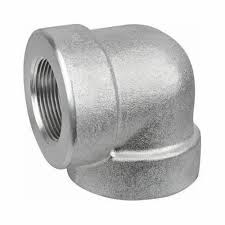 |
Threaded Elbow A threaded elbow is a pipe fitting used to change the direction of a pipe, with threads on one or both ends. It usually consists of an elbow body and a threaded part. The bending part of the elbow body is generally 90° or 45°. |
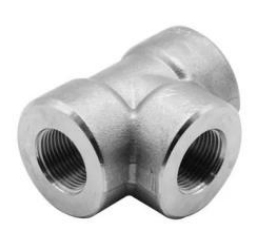 |
Threaded Tee Threaded Tee is usually used in some low-pressure small-diameter pipeline systems. It can divide the pipeline into three branches and form a 90-degree angle between the three branches. |
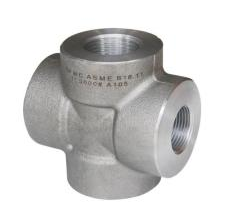 |
Threaded Cross Threaded Cross is a pipe connector with four openings, usually used to divide the pipe system into four different directions to achieve the diversion of the medium. |
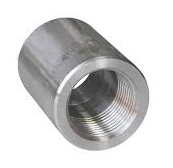 |
Threaded Coupling The threaded coupling is a simple but important pipe connection fitting. Its main structure is a hollow cylinder with threads inside. The threads at both ends of the couplings are usually of the same specification so that it can be connected to threaded pipes of the same diameter. |
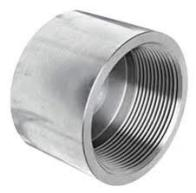 |
Threaded Cap A threaded cap is a pipe fitting used to close the end of a pipe. It is mainly composed of a cap body and a threaded part. The cap body is a hemispherical or flat-top structure with a hollow interior to fit the outer diameter of the pipe. |
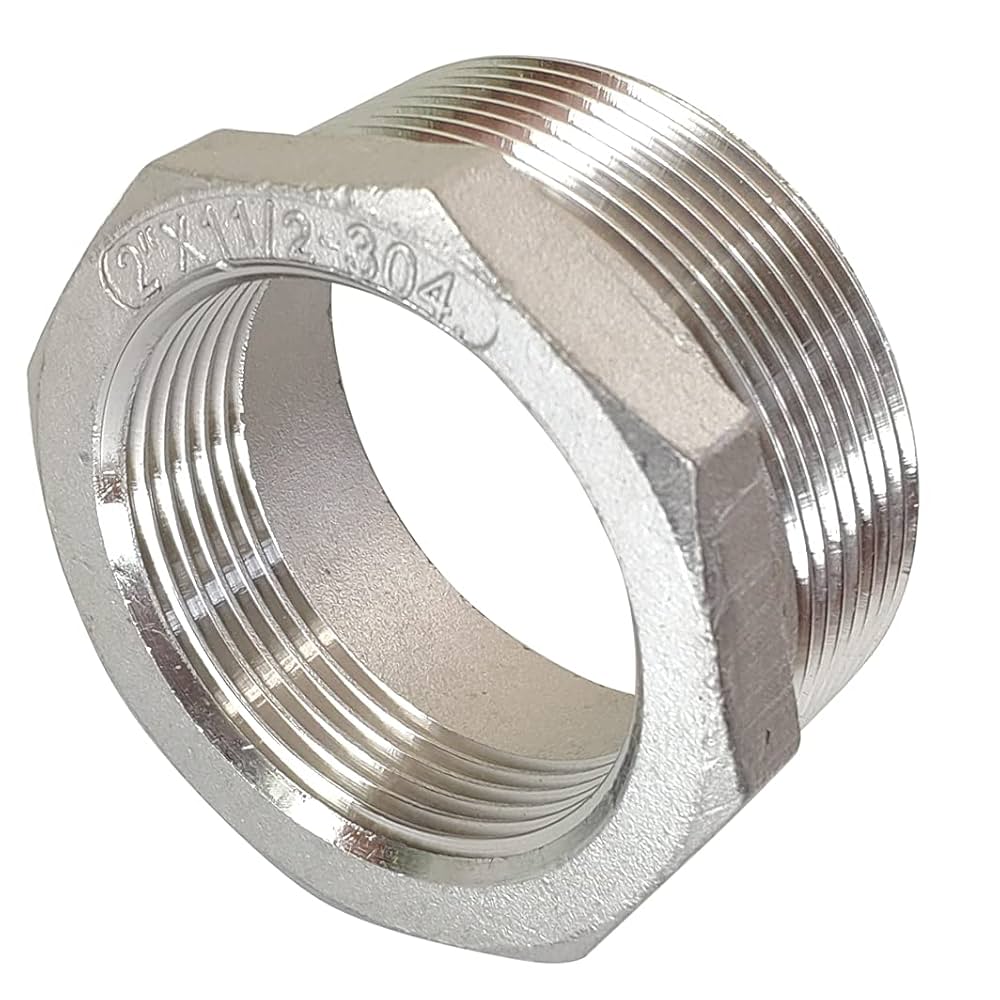 |
Threaded Bushing Thread bushing is a technique used to repair damaged or worn threads by installing thread inserts made of special metals or alloys into the original thread holes to restore the dimensions and load-bearing capacity of the threads. This method not only extends the service life of parts, but also improves the strength and wear resistance of connections. |
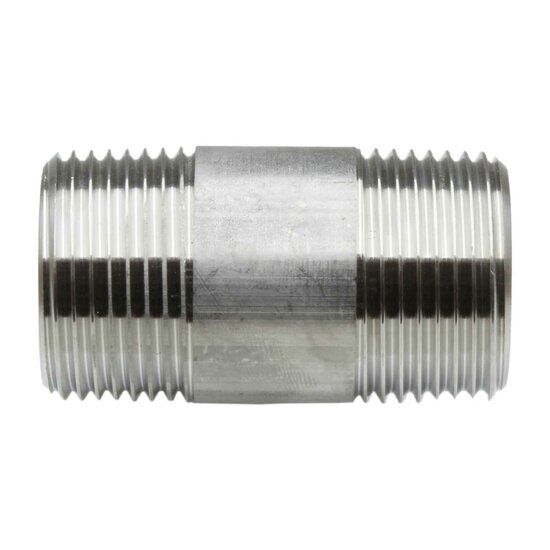 |
Threaded Nipple A threaded nipple is a short pipe fitting with internal and external threads at both ends, used to connect two sections of threaded pipes to extend or transition the pipeline. It enables quick and reliable pipeline connections while facilitating maintenance and replacement. |
Advantages of NPT Threaded Fittings
- The primary reasons for choosing NPT threaded fittings over other connection methods are their significant advantages:
- Easy Installation: No specialized welding equipment or technical expertise is required; installation and removal can be easily accomplished using a wrench. This significantly reduces construction costs and time.
- Reusability: As a mechanical connection, NPT threaded fittings can be repeatedly disassembled and reassembled without damage, facilitating maintenance and adjustments to the piping system.
- Excellent Sealing Performance: The tapered thread design creates compression when tightened, forming a reliable leak-proof seal. When installed with PTFE tape or thread sealant, the sealing effect can be further enhanced.
- Cost-Effective: Compared to welded fittings, NPT threaded fittings typically have lower installation costs, especially for small-scale pipeline systems that require frequent adjustments or maintenance.
Advantages of NPT Thread
The tapered design provides strong sealing performance, making it suitable for high-pressure applications.
The NPT thread design is specifically engineered to achieve sealing through thread contact, eliminating the need for additional O-rings or gaskets.
It prevents sealant contamination of the medium, making it suitable for sensitive applications such as fuel and lubricants.
Strict dimensional parameters ensure good interchangeability between products from different manufacturers, making them widely compatible in North America and regions adhering to related standards.
Threaded Sealing Method
Teflon tape
A thin, white tape that fills the microscopic gaps between threads when tightened, preventing leaks. When using, it should be wound clockwise around the male thread, ensuring the winding direction aligns with the insertion direction.
– First, wrap the Teflon tape around the external threads in a clockwise motion.
– Overlap the tape halfway between each wrap to ensure a tight seal and complete coverage of the thread surface.
– Apply enough layers of Teflon tape to ensure a good seal on the threads without excessive residue that could prevent proper tightening.
Thread sealant
A liquid or paste-like sealant that cures after application to the threads, forming a stronger, more pressure-resistant seal. Suitable for high-pressure applications.
– Use a brush or applicator to evenly apply a thin layer of pipe sealant to the external threads.
– Ensure that the sealant is evenly applied to the entire thread surface, without clumps or excess residue.
– Use a pipe sealant that is suitable for the application and the type of fluid being conveyed through the fitting.
Difference Between BSP & NPT Threads
BSP and NPT are two different thread standards, with their primary differences lying in geographical region, thread angle, and sealing method. NPT (American Standard Tapered Pipe Thread) is primarily used in the United States and Canada, featuring a thread angle of 60 degrees. Sealing is achieved through the compression created by tightening the tapered thread, typically requiring the use of PTFE tape or sealant. BSP (British Standard Pipe Thread) is primarily used in Europe, Asia, and Commonwealth countries. It has a thread angle of 55 degrees and is divided into two types: tapered (BSPT) and parallel (BSPP). BSPT achieves sealing through the thread itself, while BSPP requires gaskets or O-rings for sealing at the end face. Due to differences in design and dimensions, these two thread types are incompatible.
How to Choose the Right NPT Threaded Fittings?
Material: Select the appropriate material based on the nature of the fluid, temperature, and pressure. For example, stainless steel (304/316) is suitable for corrosive media, while carbon steel or copper is suitable for general fluids.
Size: Ensure that the size of the fittings (e.g., 1/2 inch, 3/4 inch) matches your piping system perfectly.
Pressure Rating: Select the appropriate pressure rating (e.g. Class 3000) based on the system’s operating pressure to ensure the threaded fittings can withstand the pipeline’s working pressure and prevent leaks or damage.
Pipeline Layout: Use couplings for straight connections, elbows for direction changes, and tees for branching or merging.
Application of NPT Threaded Fittings
Oil and gas pipelines
Chemical equipment pipelines
Water treatment systems
Firefighting pipelines
Pharmaceutical industry
Food processing equipment
Air conditioning and refrigeration systems
Shipbuilding and marine engineering
Hydraulic and pneumatic systems
Building pipeline installation